

Custom front.
Shopify back.
The Flower Room is a Newtown florist that had outgrown BigCommerce. We built them a custom Next.js storefront and put Shopify behind it. Customers get a fast site that looks like the shop. Staff keep an admin they already know.
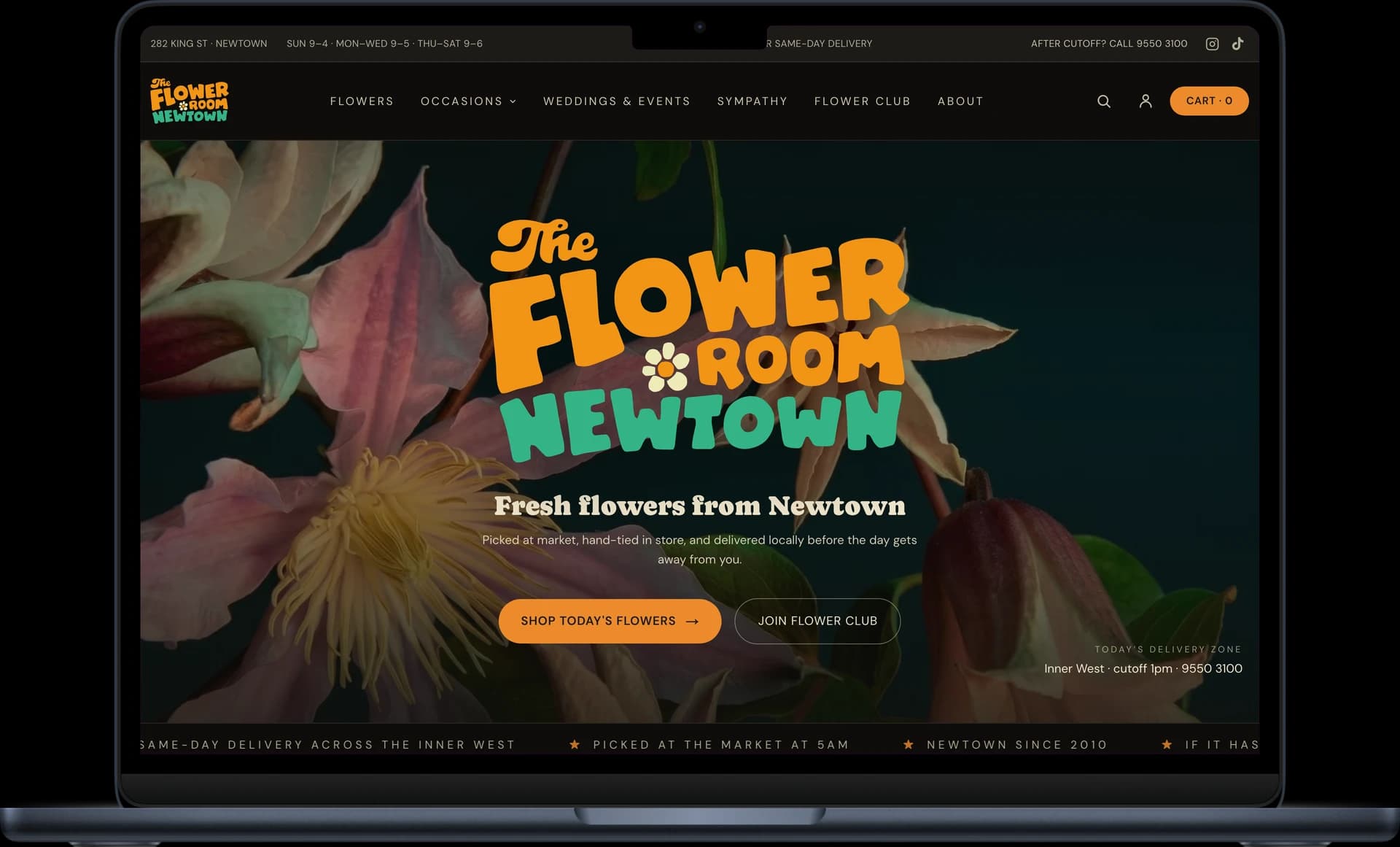
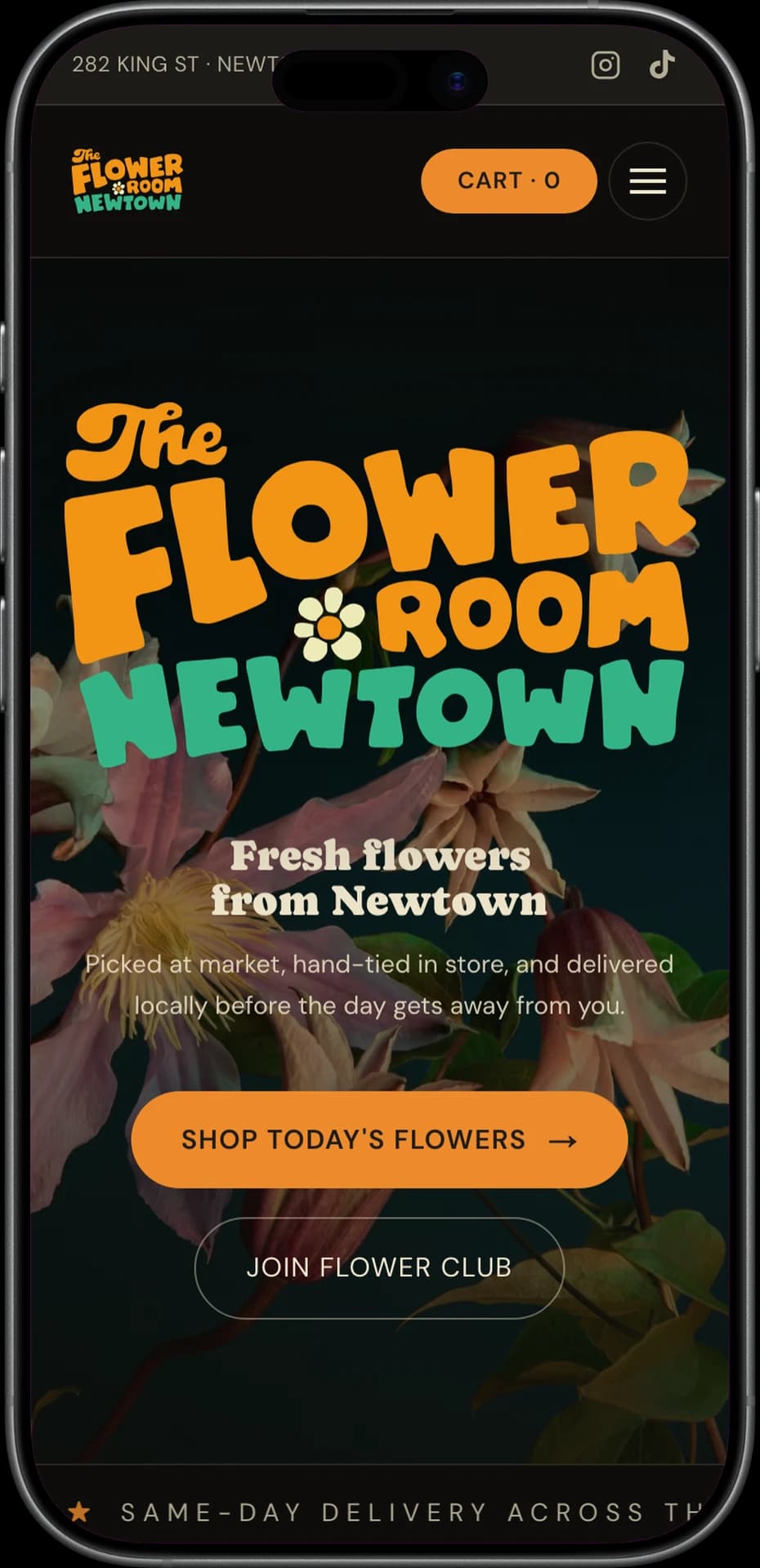
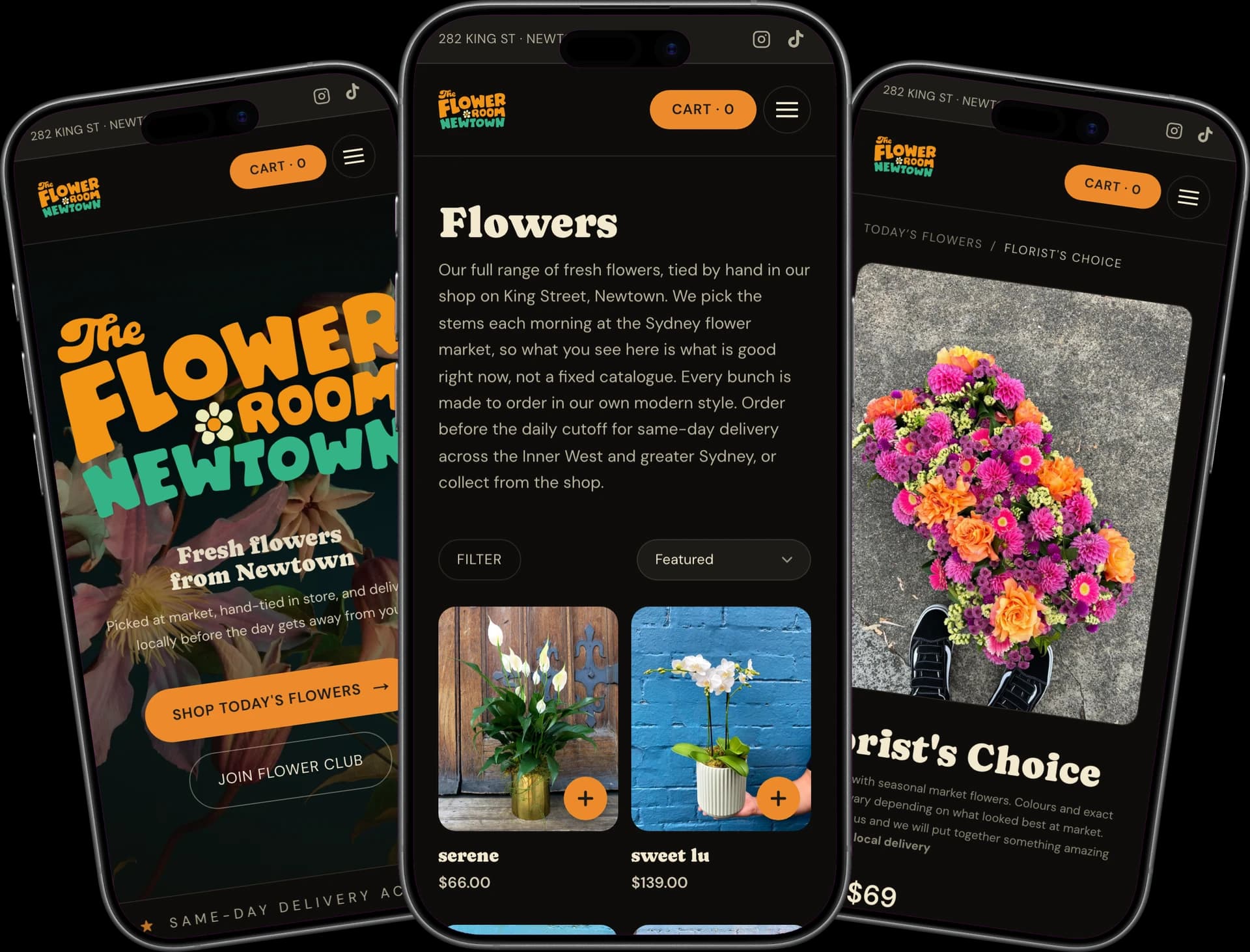
A real shop on a generic platform.
The Flower Room has sold flowers on King Street in Newtown since 2010. Staff pick stems at the Sydney market at 5am, hand-tie bunches in store, and deliver across the Inner West the same day. The catalogue changes with whatever looked best at the market that morning.
The old site ran on BigCommerce. A stock theme could not carry the Newtown character, loaded slowly, and charged a platform fee every month regardless. A florist whose stock changes daily was selling through software built for fixed catalogues.
The brief was narrow. Leave how the shop runs alone, and rebuild how it looks and loads online. Same market flowers, same team, same daily rhythm, on a storefront that matched them.
One shop, split in two.
Custom storefront, Shopify engine
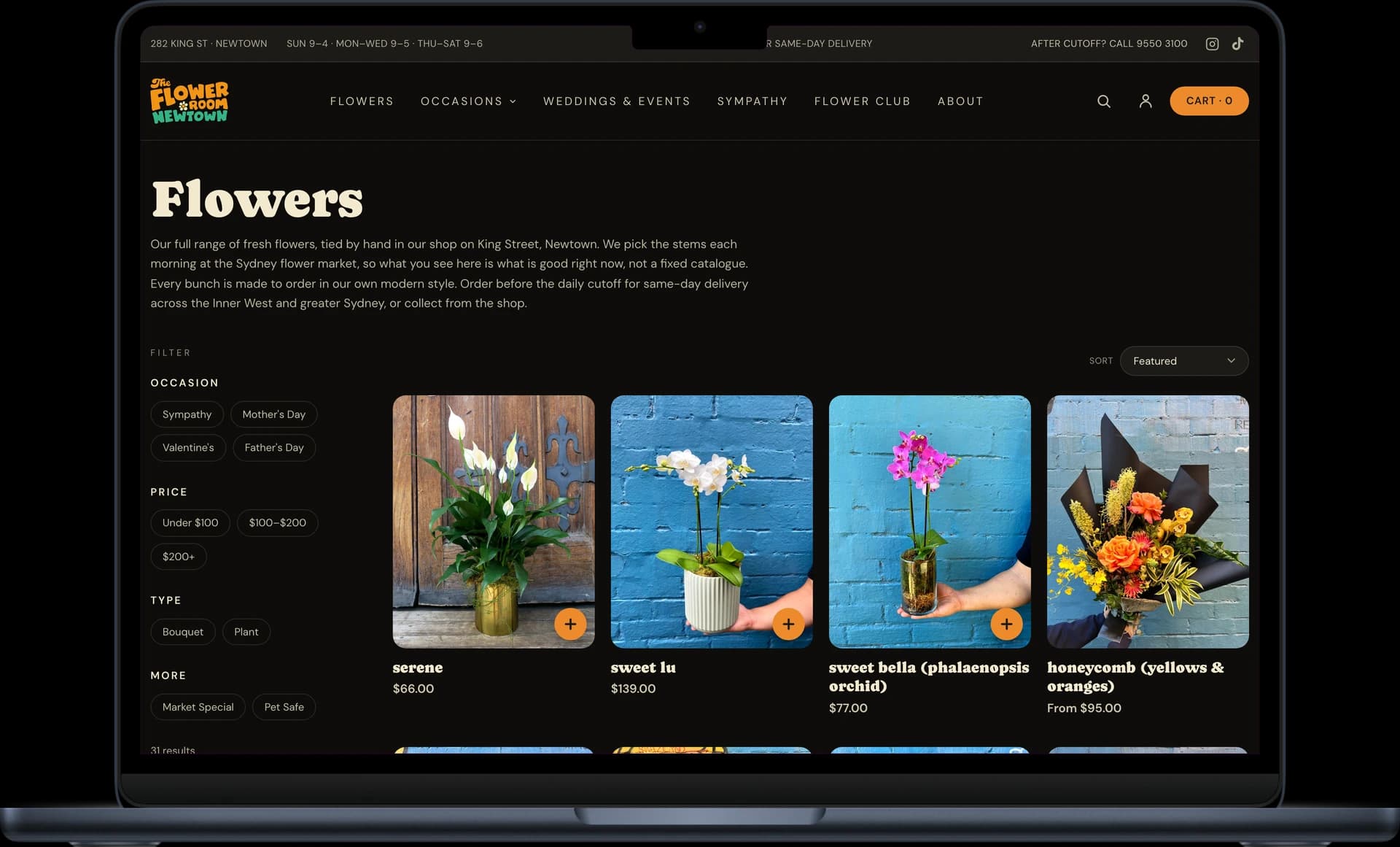
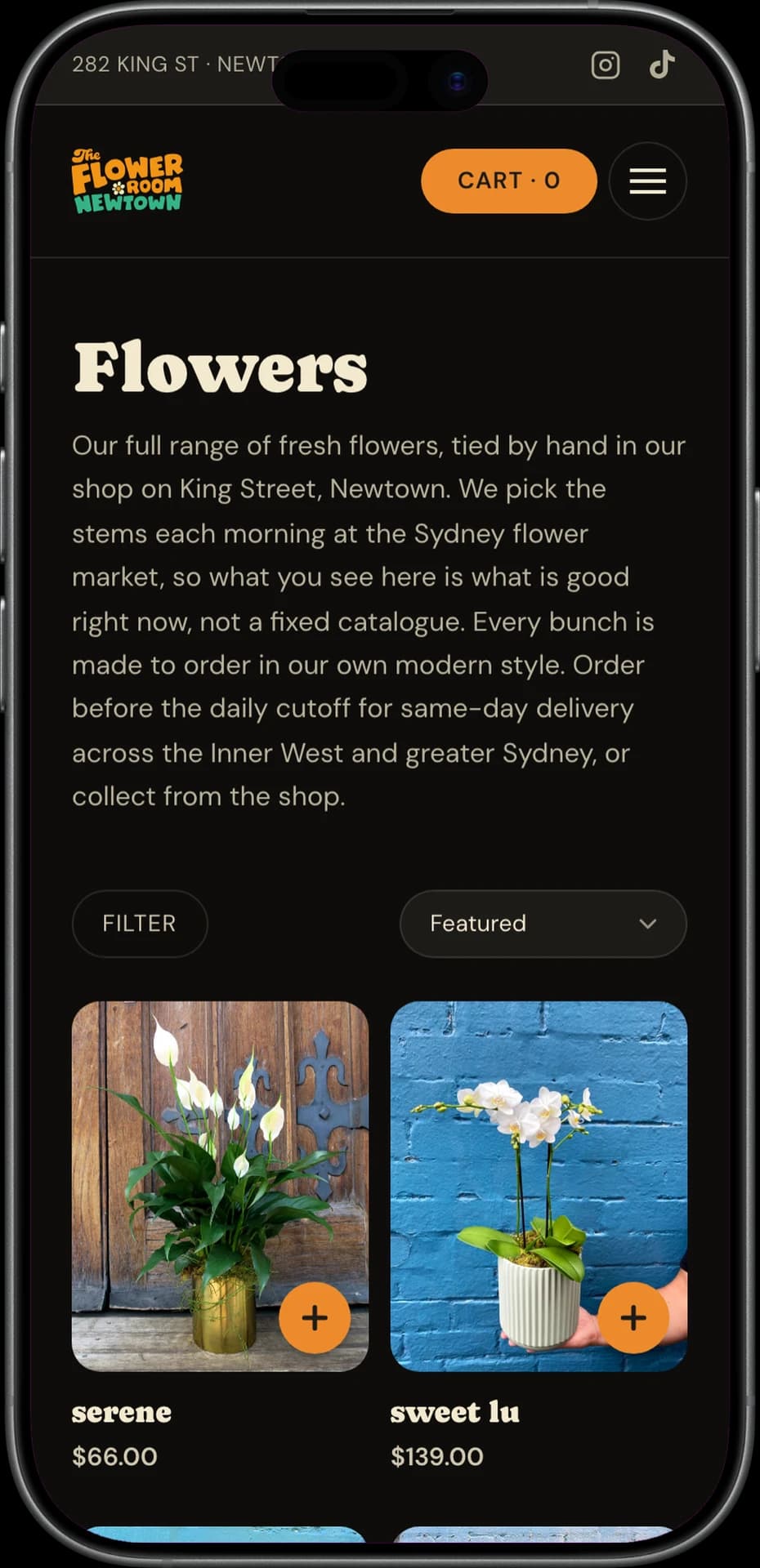
Customers browse a Next.js storefront hosted on Vercel, built to carry the brand and load fast on a phone. Every product, price, and cart action reads live from Shopify through its API. Checkout and payments run on Shopify, so the money side is proven from day one.
The split means the storefront can look and behave however the shop needs, while Shopify handles the catalogue, checkout, and payments behind it. Design freedom out front, reliable commerce out back.
Everything editable from Shopify
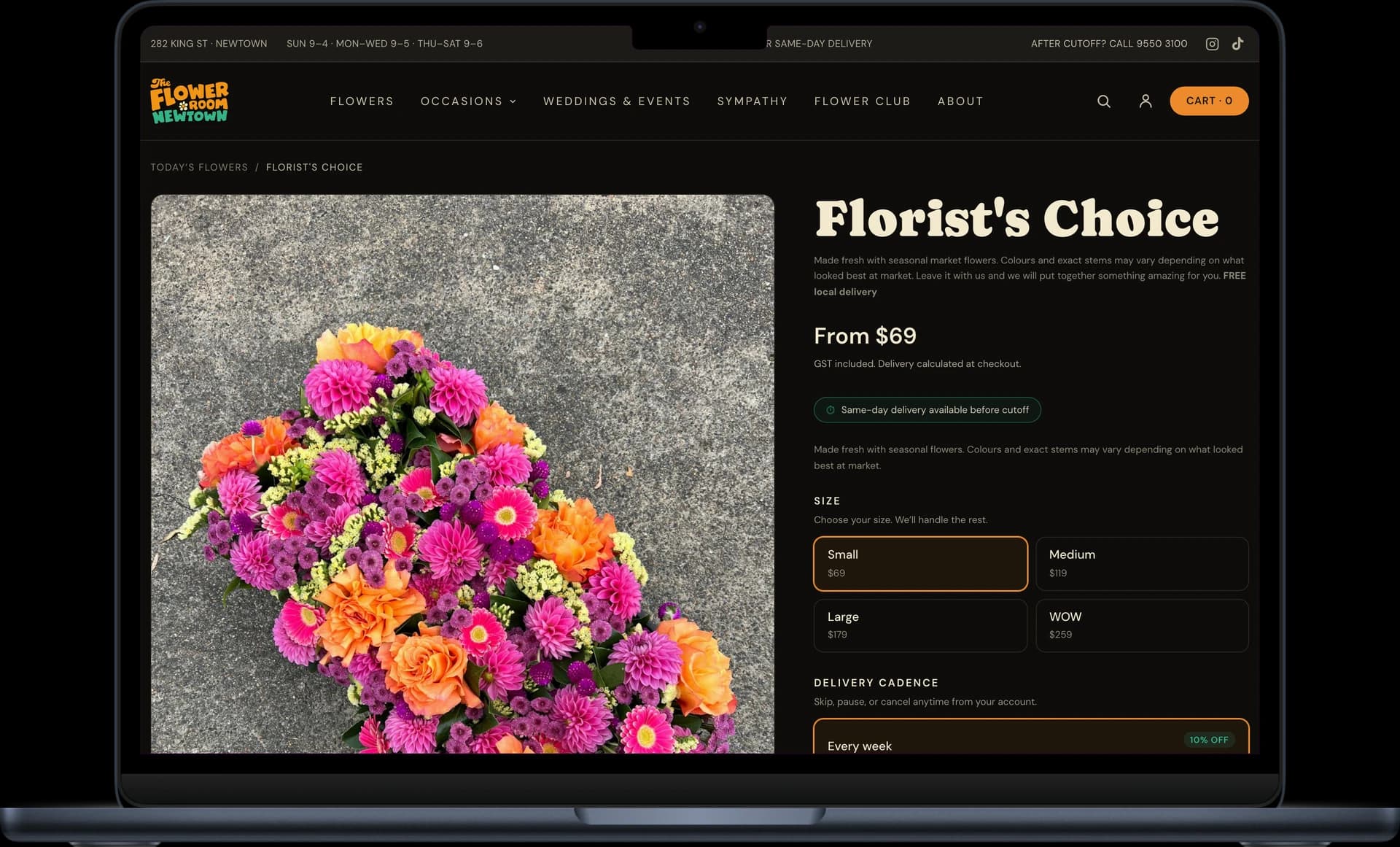
Products, images, page copy, and the portfolio gallery are all Shopify metaobjects the owner edits from the admin or a phone. When a bunch sells out at the market, staff update it in seconds. The team handles it without us.
A custom app for the delivery run
A separate Express service handles the parts Shopify does not. When an order is paid, the app dispatches it to Detrack for same-day delivery, mirrors gift cards to Square so they redeem in store, and syncs order updates between both systems.
Off the platform. On their own code.
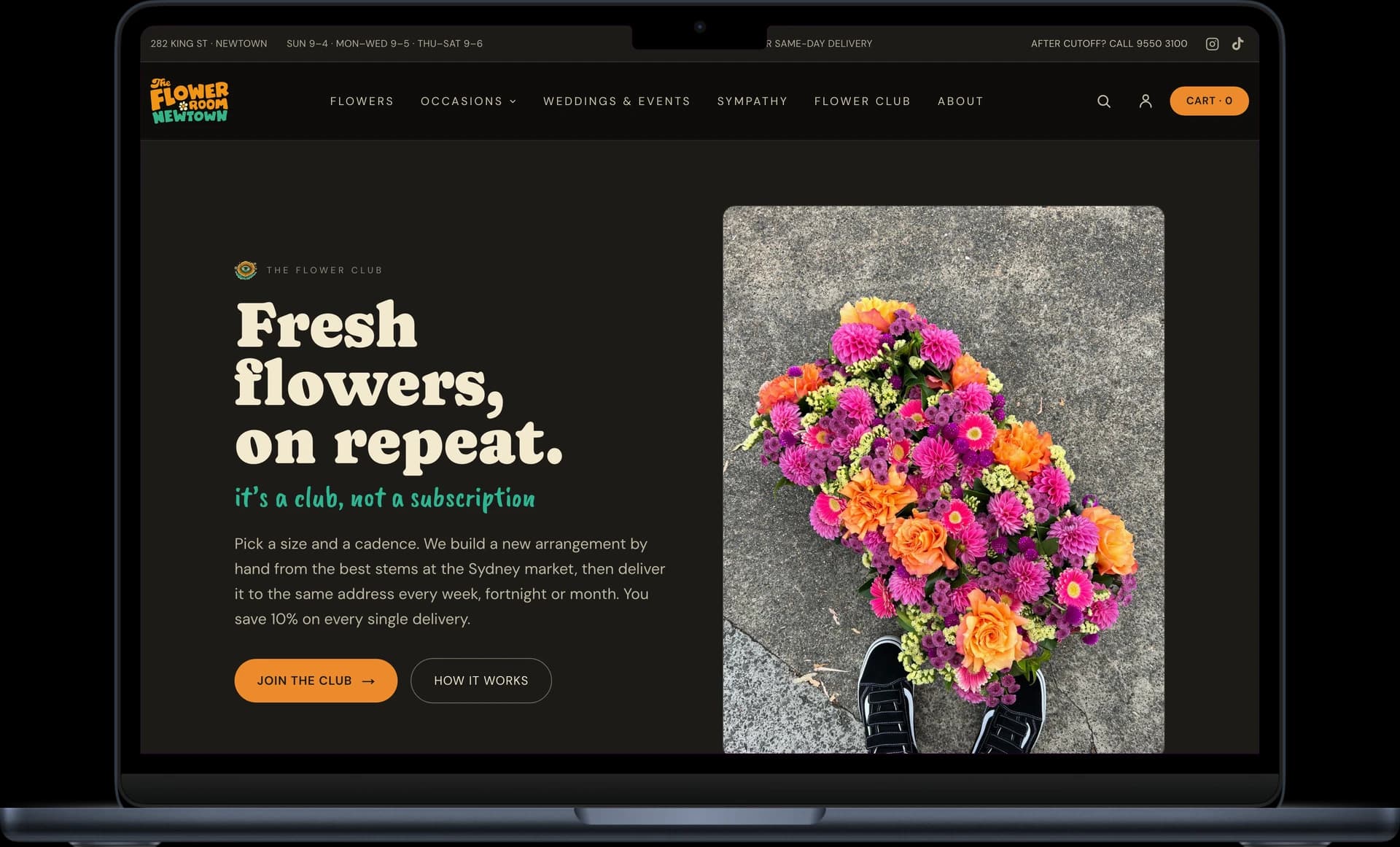
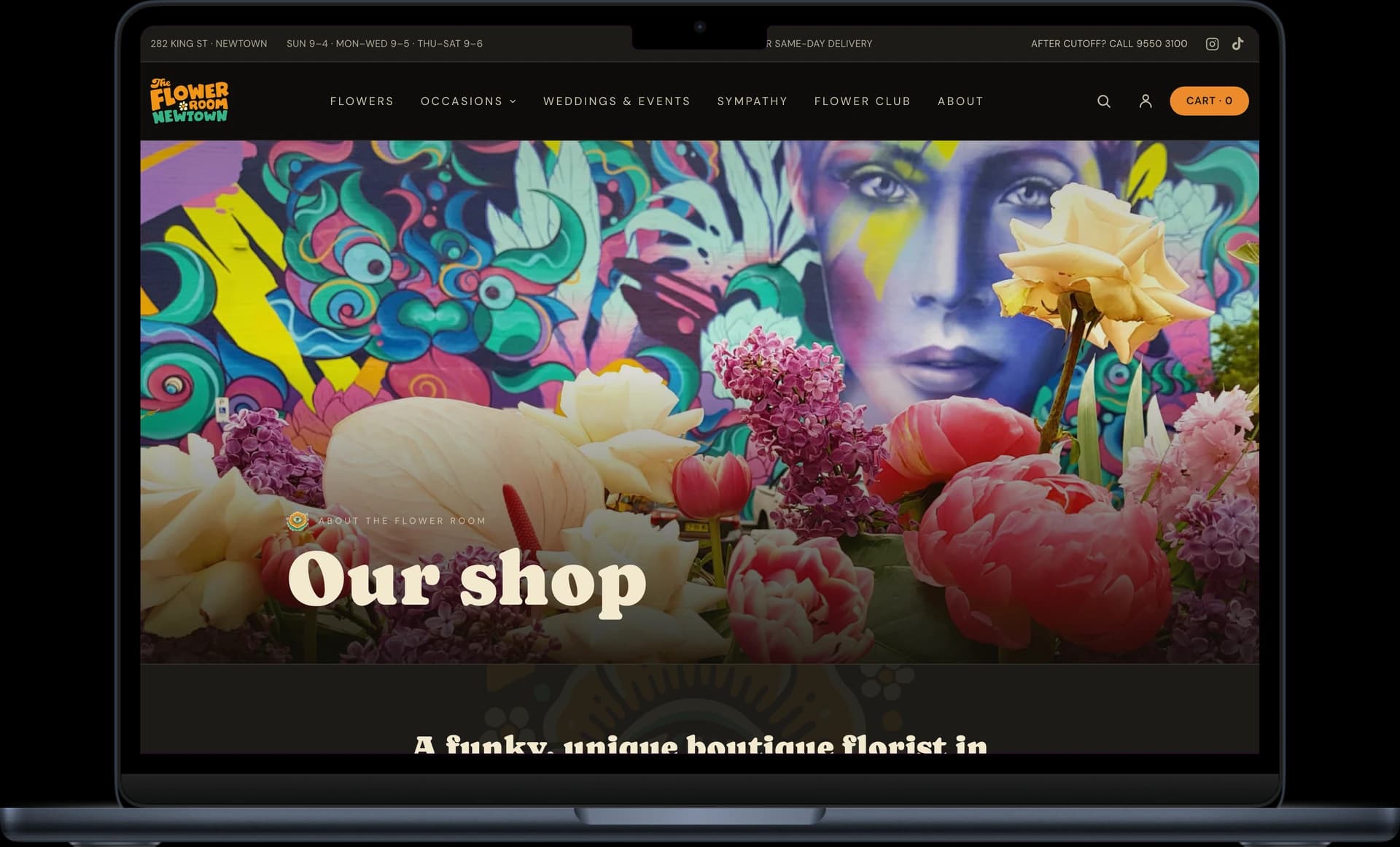
The Flower Room now runs on a storefront it owns. The Next.js site carries the Newtown character a stock theme never could, and the shop no longer pays a platform to host a template.
The build ships with 1,018 automated tests, 518 on the storefront and 500 on the custom app. They cover the cart, the Shopify sync, the Detrack dispatch, the gift-card mirror, and the delivery pricing logic. The store went live after the year's busiest week, so the cutover never interrupted trading. Legacy links redirect, and the old rankings held.
Staff run the whole thing from the Shopify admin they already knew. The engineering sits underneath, out of their way.
Common questions about headless commerce
Want one like it? Here is the stack.
Same studio, same architecture, same published pricing. Pick the entry point that matches what you need.

Outgrown your ecommerce platform?
We move stores off BigCommerce, WordPress, and dated Shopify themes onto custom storefronts that load fast and stay easy to run. Keep the admin you know. Lose the ceiling.