

Real code. Real Postgres. Owned by you.
Custom web development for Perth teams. Next.js on Vercel, Postgres on Neon and Stripe payments, delivered in days to weeks with your own GitHub and billing.

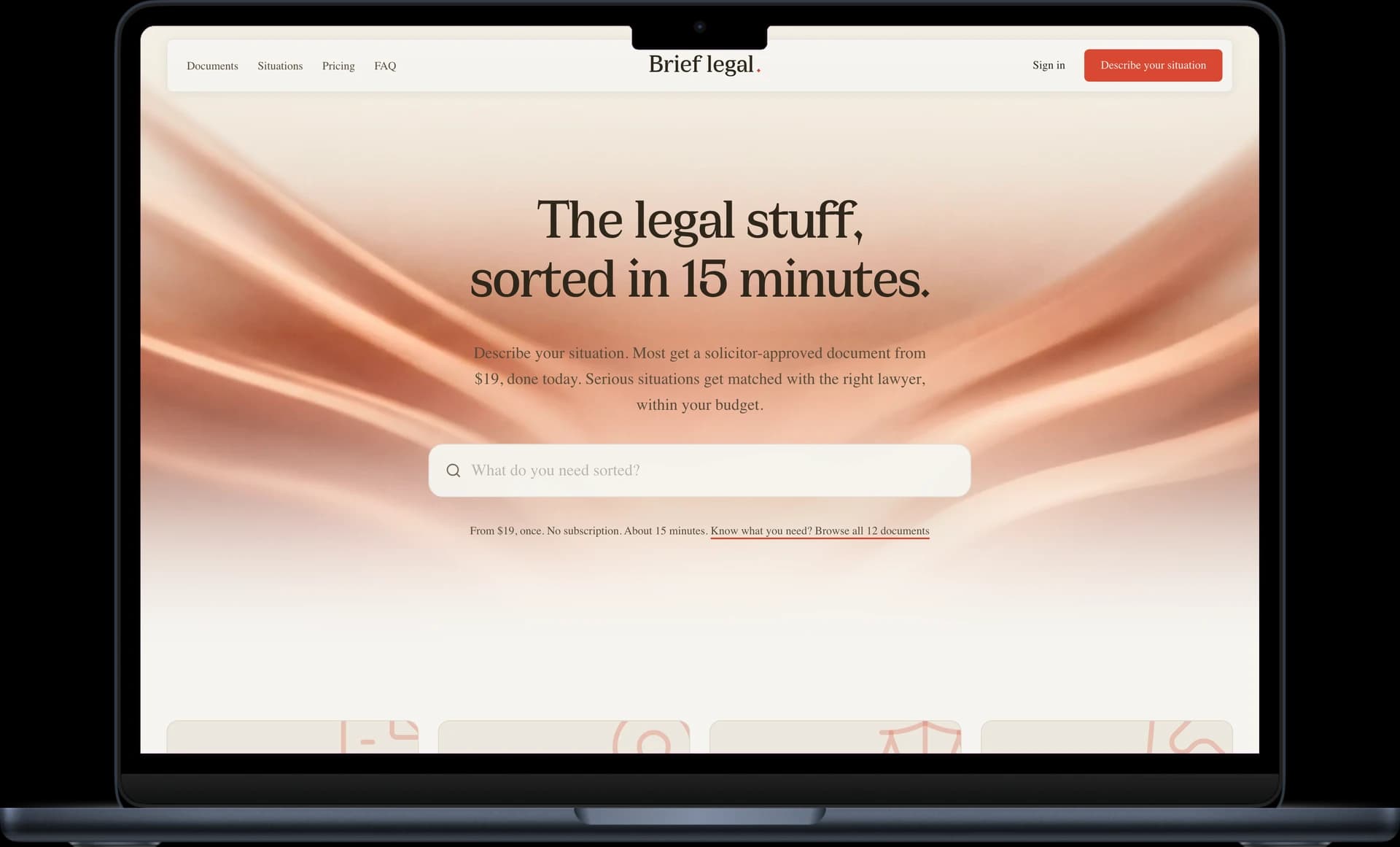
Two production builds. Real users. Real code.
Real code on GitHub
Every project lives in your GitHub organisation from the first commit. Pull requests, code review, version history, branch protection. Your next dev opens it in Cursor and understands it in an afternoon.
Stripe and Postgres, not plugins
Real payments through Stripe with webhooks handled server side. Real Postgres with migrations in version control. No form builder plugin, no WooCommerce shortcode, no CMS block stacking pretending to be a product.
You own the deployment
Vercel team on your account. Neon project on your account. Stripe on your account. Domain on your account. We collaborate during the build and disappear cleanly after handover. No platform lock-in, no retainer hostage.
Scope-based pricing. Published numbers.
Three tiers. Every tier includes 100% code ownership, 30 days of post-launch support, and the same nationwide pricing our Sydney clients see. No Perth premium.
Portal
$8,4974-7 daysInternal tools, client dashboards, admin panels.
- Client portal or admin dashboard
- Postgres schema + typed server actions
- Authentication + role-based access
- Responsive design, deployed to your Vercel
- GitHub handover + Loom walkthrough
Need it sooner?
Platform
$19,9971-2 weeksMulti-feature business apps and workflow automation.
- Booking, scheduling, or workflow automation
- Multi-role auth with permissions
- Third-party integrations (CRM, APIs, Stripe)
- Email and webhook automation
- Admin panel with analytics
Need it sooner?
SaaS MVP
$34,9972-4 weeksLaunch-ready SaaS products with billing and multi-tenancy.
- Subscription billing via Stripe
- User onboarding and lifecycle emails
- Multi-tenant architecture
- Public API + documentation
- Production monitoring and logging
Need it sooner?
50% upfront, 50% on delivery. Maintenance from $497/mo. Nationwide pricing, no Perth surcharge, no remote tax. Express delivery starts the build the next business morning and ships in half the standard timeline.
Mining money, WordPress quotes.
Perth is an hour from Singapore, two from Jakarta, and three from Sydney. It hosts a real tech community, FLUX and Fern on St Georges Terrace, Plus Eight accelerator cohorts, Curtin engineering, and a mining sector paying global day rates for software. The problem is not the money. The problem is that when a Perth team goes shopping for a real build, the quotes come back as a WordPress theme with a custom logo.
More about the Perth market
The Perth founder who actually understands the stack ends up explaining to three different local agencies why jQuery is not a framework and why the Postgres row is not a feature.
“Average senior software developer in Perth, $137,000 base salary. The typical range sits between $112,650 and $148,000.”
Glassdoor, Senior Software Developer Perth, December 2025 (63 reported salaries). Before super, leave, tax, benefits, equipment, and onboarding.
The alternative is a Sydney CBD agency that treats Perth as a quarterly invoice with a three hour calendar. Or an offshore shop that ships the build and disappears before the first production incident. Perth deserves a third option.
Development costs and delivery in Perth
Four ways to get a custom build. Three of them hurt.
First-year cost to ship a real custom build, AUD
Sources: Glassdoor Perth senior developer salary, December 2025 ($137K base), loaded with 11.5% super and conservative overhead. Sydney agency range from published Australian dev agency rate cards, April 2026. Offshore range from Clutch.co India and Eastern Europe pricing. Studio Slate figures are the web-app-starter, web-app-professional, and web-app-premium tiers below.
The first in-house dev hire takes six months to find and costs more than most Studio Slate builds ship for.
Perth dev salaries are global now. The contractors are booked. The Sydney agencies see Perth as a travel budget. The offshore option is a coin flip. A one-off custom build on a proven stack, shipped in days to weeks, then handed over cleanly to your internal team, is the only one of the four that respects the calendar.
The stack matters. It is not a detail.
We ship Next.js on Vercel with Postgres on Neon and Stripe for payments. The same architecture that runs Linear, Cal.com, and Cursor. Typed server actions, edge deployment, preview URLs on every pull request, migrations in version control. When your internal dev opens the repo next year, everything is where they expect it.
Shipped, not scoped.
A Sydney agency spends a month on discovery, a month on Figma, and a month arguing about component libraries before writing a line of production code. We scope tightly in the first call, write code on day one, and push a staging link by the end of the week. Brief Legal went from an empty repo to shipped AI legal documents in two and a half weeks.
Four steps.
One engineer.
Sydney based, delivered to Perth remotely. Built Equal Legal (AI legal documents in 2.5 weeks), Sub Tracker (AI bank statement parser with 113 SEO posts), and Plan Flowers (cron-based platform with 163 automated tests). Perth clients get the same code quality because the work is in version control, not a meeting room.
Scoping call
30 minutes on Zoom. We map the data model on a shared screen, pick the stack decisions upfront, identify the integrations, and lock scope. You leave with a written quote and a delivery window. 9am Perth, 12pm Sydney. No discovery phase invoice, no Figma bill, no twelve slide deck.
Production build
We provision the GitHub repo, the Vercel project, the Neon database, and the Stripe account on your team. Code starts on day one. You get preview URLs on every pull request, a staging link from day two, and a running list of decisions in the repo README. Changes go through proper pull requests, not email attachments.
Ship and integrate
Final review, test suite green, environment variables locked, analytics wired, error monitoring configured. Production domain cut over with zero downtime. We stay on the Slack channel for the first week to handle anything weird in the wild. No war room, no handover ceremony, just a calm launch.
Handover and support
30 days of post-launch support included. A full handover document plus a Loom walkthrough of the codebase file by file. Your internal dev or a Perth contractor can keep shipping features without us. Optional maintenance from $497 a month if you want to keep the relationship going.
Technical questions.
What stack do you actually build on, and why that one?
Next.js (App Router) on Vercel, PostgreSQL via Neon or Supabase, Stripe for payments, TypeScript end to end, Tailwind for styling, Radix or shadcn for primitives. Auth via Clerk, NextAuth, or a custom JWT implementation depending on requirements. It is the same stack that runs Vercel, Linear, Cal.com, Notion, and Loom. We chose it because it gives us a monorepo with real typed server actions, edge deployment everywhere, a mature ecosystem, and zero lock-in. Every Perth client ends up on GitHub, Vercel, and Neon, all on their own accounts, paying the same bill we pay. If a new framework earns its place in five years, we will move. Until then, this is the most honest stack in production.
Postgres or Mongo. Which and why?
Postgres, almost always. A real SQL database with foreign keys, transactions, and constraints is the difference between data you can trust in three years and data you spend a week rebuilding. Sub Tracker uses Postgres to store parsed bank statements so every transaction ties back to the statement it came from. Brief Legal uses Postgres because legal documents have relational structure and nobody wants to debug a denormalised JSON blob at midnight. We use MongoDB only when the use case is genuinely unstructured and query patterns are chaotic, which is rarer than the internet thinks. Neon and Supabase both give you serverless Postgres with a free tier, which means you start small and scale without rearchitecting.
Where does the code actually get deployed?
Vercel, in your own account, on your own billing. Production, staging, and preview environments are all live from day one. Every pull request gets its own preview URL so you can click on a staging link before anything ships to the real domain. We wire up GitHub Actions for tests and type checks, set up the environment variables, configure custom domains, and hand you the keys. If you ever want to migrate off Vercel to Cloudflare or AWS, the code is standard Next.js and moves cleanly. No vendor lock-in at the framework layer. The database lives on Neon or Supabase, also on your account. You own the infrastructure, we just set it up.
Do I own the code and everything around it?
Yes, completely. Your GitHub organisation, your Vercel team, your Neon project, your Stripe account, your domain, your environment variables. We invite ourselves in as collaborators for the build, and the moment the project ends you revoke our access if you want. There is no proprietary CMS, no hosted builder tool, no platform we control. The codebase is a standard Next.js monorepo any Perth dev can open in VS Code or Cursor and understand in an afternoon. This is the opposite of WordPress with a theme full of shortcodes or a SaaS platform that charges you forever for the right to keep logging in.
How does the handover to my internal dev team actually work?
Every project ends with a handover document and a Loom walkthrough of the architecture. The document covers the data model, the auth flow, every environment variable and what it does, the deployment pipeline, the test suite, how to run it locally, and where every third-party integration lives. The Loom is a thirty to sixty minute screen recording where the founder walks through the codebase file by file. Your internal dev or your next Perth contractor can be productive inside a day. No black box, no tribal knowledge, no retainer hostage situation. We have done handovers to internal teams at several clients where the brief was explicitly that we build it and then disappear, and the code has kept shipping features years later without us.
What does ongoing support look like after launch?
Every build includes 30 days of post-launch support at no extra cost. Bugs, small changes, questions, environment issues. After that, you have three options. One, a maintenance retainer starting at $497 a month covers bug fixes, dependency updates, and small feature additions on a monthly basis. Two, your internal dev or a Perth contractor takes over the codebase because everything is documented and standard. Three, you call us when you need something and we quote the specific scope. No lock-in, no 36 month hosting contracts, no minimum commitment. Most clients stay on the retainer because it is cheap insurance, but the door is unlocked the day we ship.

Perth deserves a real build, not another WordPress quote.
30 minutes on Zoom. Bring the data model and the integrations list. Leave with a written quote, a delivery window, and an honest answer on whether we are the right fit.